
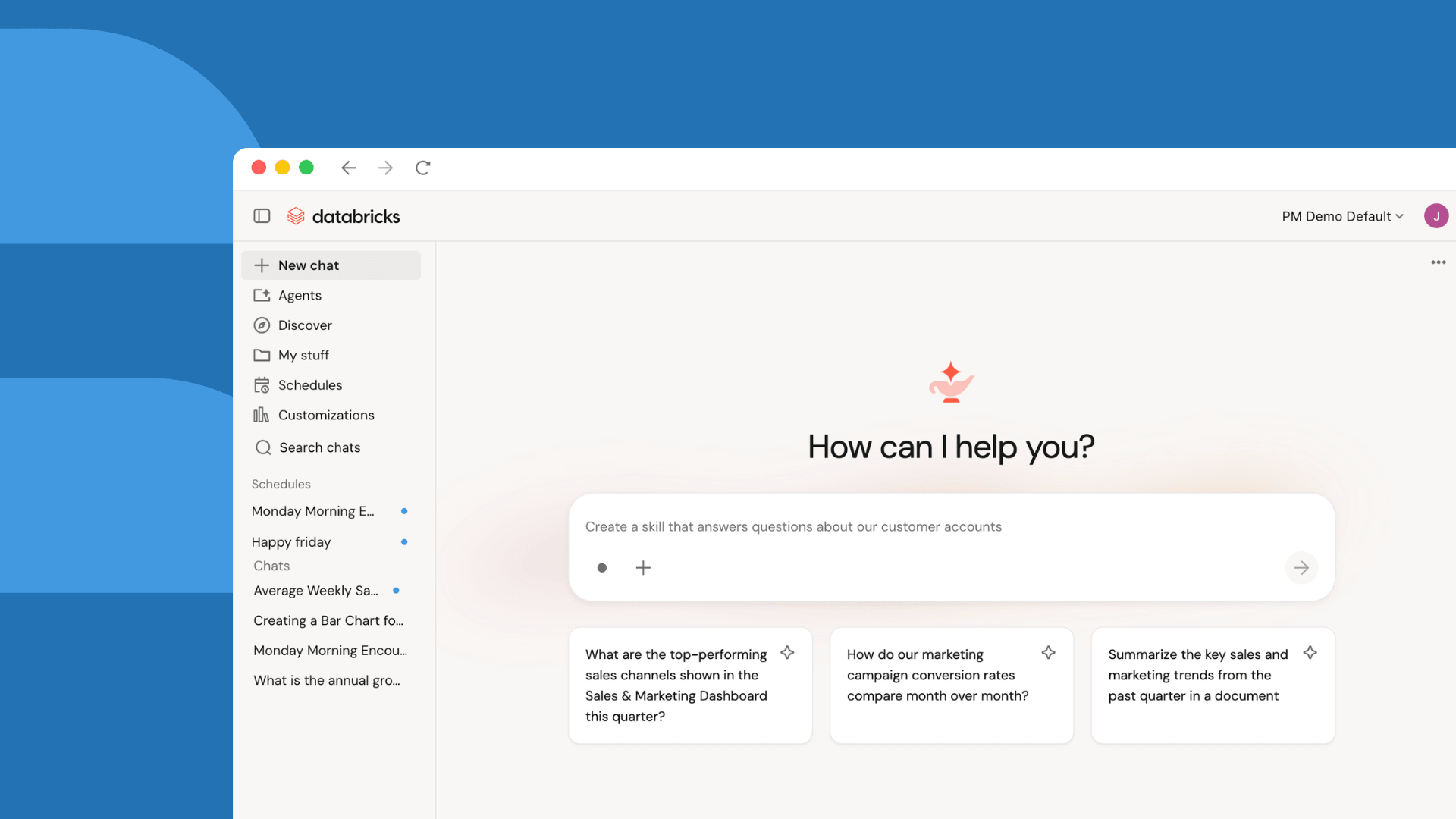
- What: Databricks announced a major update to Genie One, adding a desktop app, collaborative documents, and reusable Genie Agents.
- When: The macOS desktop app is available immediately in beta; other features are rolling out to the Genie One experience.
- Key Features: Native macOS application, live editable documents with data visualizations, and the ability to convert conversations into shareable Genie Agents.
- Access: Creating Genie Agents requires Workspace or Databricks SQL access; the macOS app is currently in beta.
Databricks today announced a suite of new features for Genie One, its generative AI data assistant, aimed at bridging the gap between receiving an AI-generated answer and taking manual action. The updates include a native desktop application, collaborative document editing, and the ability to transform conversations into reusable "Genie Agents," allowing users to maintain workflow continuity without switching between browser tabs or external reporting tools.
According to a company blog post, the updates address a common friction point in the AI industry: the "painfully manual" work that occurs after an AI provides an initial insight. By integrating these tools directly into the Databricks ecosystem, the company aims to reduce the time spent reformatting data, taking screenshots, and manually updating reports.
A Persistent AI Coworker on the Desktop
A central component of the announcement is the introduction of the Genie One desktop app. Currently available in beta for macOS, the native application includes a global launcher intended to keep the AI assistant "at your fingertips" regardless of what other applications a user is running.
The desktop app offers the full Genie One feature set, including access to documents, specialized skills, and scheduled tasks. To ensure a seamless transition for power users, Databricks has made conversations persistent across both the web and desktop interfaces. This means a data investigation started in a web browser can be resumed on the desktop app without loss of context.
Transforming Insights into Collaborative Documents
Databricks is also expanding how users package and share the insights generated by Genie One. New document enhancements allow users to draft, revise, and comment on reports directly within the Genie One interface.
"Ask Genie One to draft a report, summary, or analysis, and it creates an editable document with live data visualizations," the company stated in its announcement. This feature is designed to eliminate the need for users to copy tables or export screenshots into external word processors or slide decks.
Key document features include:
- Live Visualizations: Charts and tables remain linked to the data, ensuring insights stay current.
- Collaboration Tools: Users can add comments, view version history, and accept or reject changes within a single view.
- Sharing and Exporting: Documents can be shared via a direct link for read-only access or downloaded as a PDF for offline use and email attachments.
- External Integration: Through Model Context Protocol (MCP) writes, users can collaborate with Genie One on a document and then export it to external file formats or tools.
Scaling Knowledge with Genie Agents
To move from ad-hoc questions to repeatable business processes, Databricks introduced the ability to create Genie Agents directly from a chat conversation. When a user has refined a conversation to include specific domain context and curated data assets, they can save that state as a reusable agent.
These Genie Agents can be shared with other teammates within a workspace, ensuring that different departments are working from the same set of governed knowledge and instructions. Databricks noted that while chat sharing is available for one-time interactions, the Genie Agents are intended to scale repeated workflows.
Creating these agents requires specific permissions, specifically Workspace or Databricks SQL access, to ensure that the data remains grounded in the enterprise’s existing security and governance frameworks.
Impact on Data Workflows and Governance
The expansion of Genie One represents a shift for Databricks from providing a simple query interface to offering a comprehensive productivity suite for data professionals. By allowing users to stay within a single environment—from initial data discovery to final report distribution—the company is positioning Genie One as a central hub for enterprise intelligence.
The focus on "governed knowledge" suggests that these updates are aimed heavily at enterprise customers who require strict permissions and data lineage. Because the Genie Agents and documents are built on top of the Databricks platform, they inherit the enterprise context and permissions already established by the organization. This reduces the risk of data leakage or unauthorized access that can occur when moving data into third-party reporting tools.
For developers and analysts, the primary impact is the reduction of context-switching. The ability to use MCP writes to interact with external documents further integrates Databricks into the broader software ecosystem while keeping the core analysis within the governed environment.
What's Next
The macOS version of the Genie One desktop app is currently available for download in beta. Databricks has directed users to its official documentation page for specific details on installation and feature configuration. While the company has not provided a specific timeline for a Windows version of the desktop app or the general availability of the beta features, the current updates are already being integrated into the Genie One user experience.