
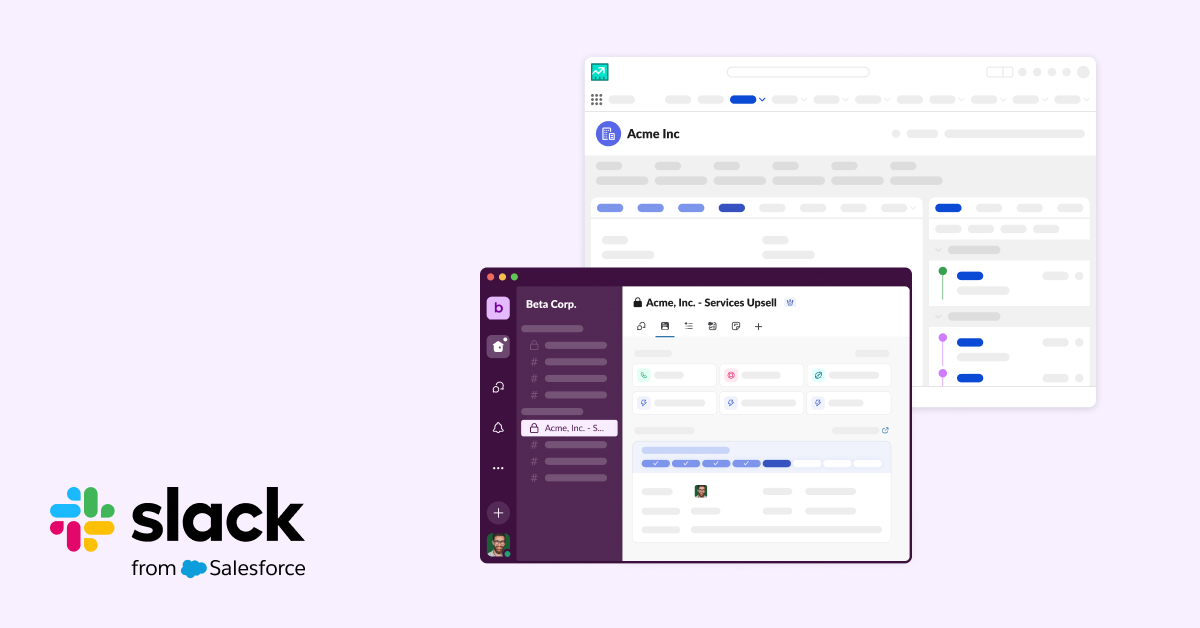
- What: Salesforce Channels, a new integration layer connecting Salesforce CRM records with Slack conversations.
- AI Integration: Powered by Agentforce, Salesforce’s new agentic AI platform.
- Capabilities: Real-time synchronization of accounts, opportunities, and cases; automated task execution like inventory checks and sales closing.
- Availability: Rolling out in the coming months across Salesforce and Slack ecosystems.
Salesforce has unveiled Salesforce Channels, a major integration initiative designed to merge customer relationship management (CRM) data with real-time team communication in Slack. By connecting Salesforce records—including accounts, opportunities, and cases—directly to Slack conversations, the company aims to eliminate the traditional silos that separate enterprise data from the dialogue used to act upon it. The move marks a significant step in Salesforce's "agentic AI" strategy, leveraging its new Agentforce platform to turn static data into autonomous action.
Breaking the Silos Between Data and Dialogue
For years, enterprise teams have operated in two distinct worlds: the "system of record" (Salesforce) where customer data lives, and the "system of engagement" (Slack) where decisions are made. Salesforce Channels seeks to unify these environments. According to official announcements from Slack and Salesforce, these channels ensure that data and dialogue are accessible in both platforms simultaneously.
When a sales team discusses a specific opportunity in Slack, the corresponding Salesforce record is updated in real-time. Conversely, updates made within the Salesforce CRM are instantly reflected in the associated Slack channel. This bi-directional flow is intended to provide every team member with the same "source of truth," regardless of which application they are currently using.
The integration is not merely a notification system; it is a structural change to how records are handled. By embedding Salesforce records into the conversational interface, teams can view history, status, and critical metrics without leaving their primary communication tool.
From Generative Chat to Agentic Action
The launch of Salesforce Channels is closely tied to the rollout of Agentforce, Salesforce’s conversational and agentic AI for CRM. While previous iterations of AI in the workplace focused on "generative" tasks—such as summarizing meetings or drafting emails—Salesforce is pivoting toward "agentic" AI, which can execute complex business processes.
In the coming months, Salesforce Channels will enable Agentforce to generate more thorough and useful responses by grounding the AI in the specific context of a team's Slack conversations and CRM data. According to Salesforce, the distinction is critical: where generative AI holds a conversation, agentic AI performs work.
For example, within a Salesforce Channel, an Agentforce bot can autonomously check warehouse inventory, confirm shipping cutoffs, and even close a sale based on the parameters of the conversation and the linked CRM record. This "workforce of ready-to-deploy agents" is designed to be grounded in the customer's own data, ensuring that the actions taken are accurate and compliant with company policy.
Specialized Agents for Commerce and Service
The integration extends into specific industry verticals through the Agentforce Commerce and Agentforce Contact Center releases. These tools are designed to handle high-volume tasks that previously required human intervention.
The Agentforce Contact Center is described as a unified solution that brings together voice, digital channels, CRM data, and AI agents into a single system. This allows for seamless transitions between AI-to-human interactions, ensuring that if an AI agent cannot resolve an issue, the human representative who takes over has the full context of the AI’s previous dialogue and the customer’s CRM history.
In the retail sector, companies like Pandora are already leveraging these "agentic experiences" to transform the customer journey. David Walmsley, Chief Digital & Technology Officer at Pandora, noted that integrating these Salesforce-powered experiences into digital channels is "redefining the online shopping journey." This shift is already showing measurable impact, with Salesforce reporting that AI assistants have grown retail traffic volumes by as much as 119%.
Impact on the Industry and Developer Ecosystem
This integration signals a power shift in how enterprise software is consumed. For developers and IT leaders, the unification of Slack and Salesforce via Agentforce reduces the need for custom-built middleware to sync data between platforms. It allows for a "plug-and-play" approach to AI agents that can operate across the entire Salesforce "Customer 360" suite.
For the broader industry, Salesforce is positioning itself against competitors like Microsoft and Google by moving beyond the "chatbot" phase of AI. By giving AI agents the ability to actually modify CRM records and perform logistical tasks within a communication app, Salesforce is betting that the future of work is not just about smarter conversations, but about automated execution.
"This changes how teams collaborate by making the CRM a living part of the conversation rather than a separate database," one Salesforce announcement noted. For users, it means less context switching and faster resolution times for customer-facing issues.
What’s Next
Salesforce Channels and the enhanced Agentforce capabilities are scheduled for a phased rollout over the coming months. As these tools become widely available, the focus will likely shift to how organizations manage the "agentic workforce" and the security protocols required when AI agents are empowered to close sales and modify financial records.
The company has indicated that further innovations in the Slack-Salesforce pipeline will continue to focus on real-time data accessibility, aiming to make every conversation a potential point of transaction or resolution.