
- What: Google researchers unveiled "TurboQuant," a new extreme compression technique for AI models.
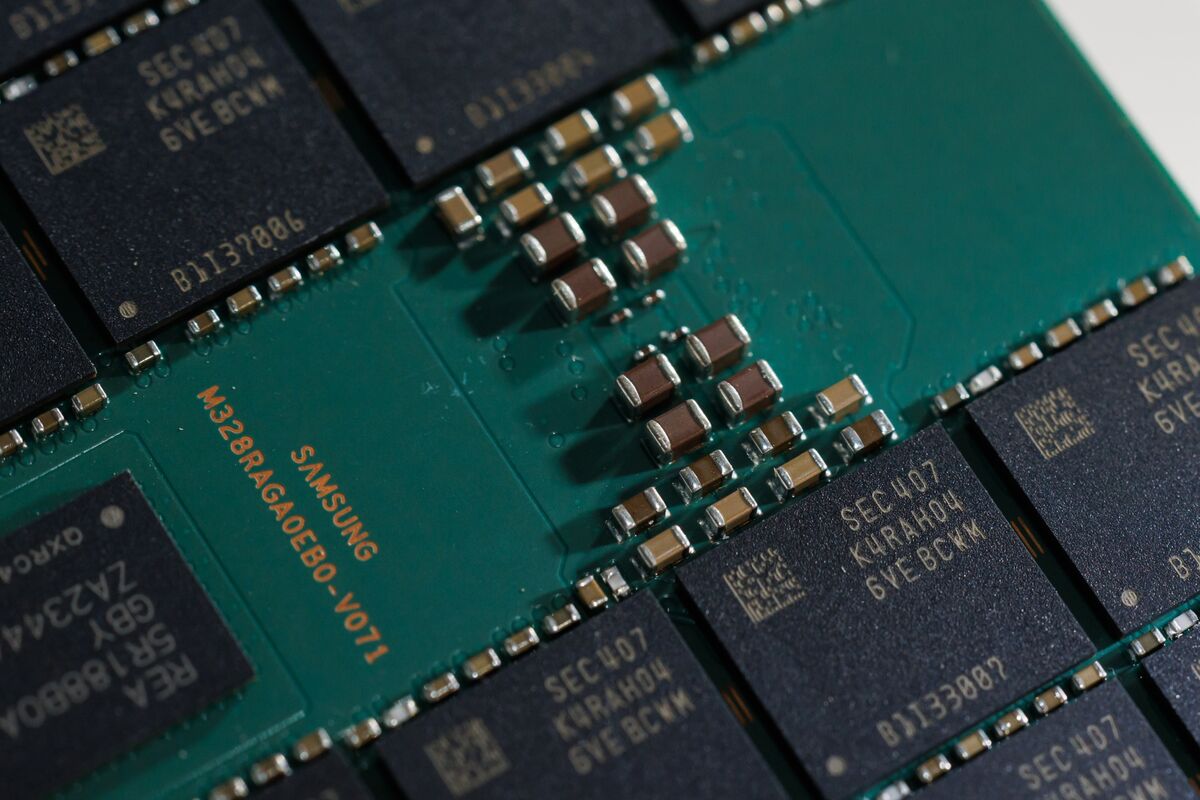
- Impact: Shares of computer memory and storage providers slumped on fears of reduced hardware demand.
- Expert Outlook: Financial analysts describe the market reaction as a "hiccup" rather than a long-term threat to the memory industry.
- Context: The breakthrough follows Google’s recent release of Gemini 3 and its ongoing expansion of Tensor Processing Unit (TPU) cloud services.
Google researchers have unveiled a breakthrough in AI model compression, reportedly titled "TurboQuant," capable of drastically reducing the memory footprint required for high-performance artificial intelligence. The announcement, detailed in a recent Bloomberg report, sparked a sudden selloff in the semiconductor memory sector as investors weighed the possibility of diminished demand for high-bandwidth memory (HBM) and storage hardware. While the breakthrough represents a significant leap in computational efficiency, market analysts suggest the stock slump may be a premature reaction to a technology that could ultimately expand the total addressable market for AI.
Extreme Compression Meets Market Volatility
The core of the market’s anxiety stems from Google’s claim that TurboQuant can redefine AI efficiency through "extreme compression." In the current AI landscape, hardware manufacturers have enjoyed a massive boom driven by the immense memory requirements of Large Language Models (LLMs). By significantly lowering the amount of hardware needed to store and run these models, Google’s new technique threatens the "more is more" sales narrative that has sustained memory stock valuations for the past several years.
According to reports from Bloomberg, shares of prominent computer memory and storage product manufacturers slumped immediately following the news. Investors are concerned that if model weights can be compressed without a loss in performance, the frantic race to buy more capacity—a major growth driver for companies like SK Hynix, Micron, and Samsung—could cool significantly.
However, the selloff may be decoupled from the long-term reality of AI scaling. Analysts cited by Bloomberg indicated that the development is likely a "hiccup" in the broader memory boom. The prevailing theory among industry experts is that while compression makes individual models more efficient, the resulting lower costs will likely lead to a massive surge in the total number of models deployed globally, maintaining high aggregate demand for memory.
Google’s Strategic Pivot: From Hardware to Efficiency
Google’s breakthrough is the latest move in its decade-long strategy to dominate the AI infrastructure layer. Unlike its primary competitor Nvidia, which generates the bulk of its revenue from selling hardware, Google has focused on providing access to its custom-designed Tensor Processing Units (TPUs) as a service through Google Cloud.
As reported by CNBC, this "chips-as-a-service" model has emerged as a secret weapon for the company. By optimizing its software stack with technologies like TurboQuant, Google can squeeze more performance out of its existing TPU clusters, offering lower prices to developers and increasing its competitive edge over cloud providers that rely solely on external hardware purchases.
This announcement also follows the launch of Gemini 3, which Google described as the first AI model built directly into its Search platform. As Fortune reported, the release of Gemini 3—which demonstrated state-of-the-art performance in coding and reasoning—previously contributed to market volatility, at one point wiping $250 billion off Nvidia’s market capitalization as investors reassessed the "current state-of-the-art" in the AI race.
Impact on the AI Ecosystem
The introduction of TurboQuant carries profound implications for developers, enterprise users, and the wider semiconductor industry.
For Developers and Startups: The ability to run high-performance models with "extreme compression" lowers the barrier to entry. Developers may soon be able to run sophisticated agents and reasoning models on consumer-grade hardware or smaller cloud instances, drastically reducing the "compute tax" that currently hinders many AI startups.
For the Semiconductor Industry: The industry is currently facing a shift in power. While Nvidia remains the dominant force in AI training, Google’s move to lease its chips and improve efficiency through software is attracting major partners. Recent reports from Sherwood News indicate that Meta has struck a multi-billion dollar deal with Google to use its training chips, as the social media giant struggles to design its own silicon fast enough to keep pace.
For Users: Increased efficiency typically translates to lower latency and reduced subscription costs. As Google integrates these compressed models into its core products, users can expect faster response times for complex queries.
"This changes how developers will allocate their compute budgets, shifting the focus from raw capacity to compression-optimized architectures," one industry observer noted.
What’s Next: The 2026 AI Shift
The market reaction to TurboQuant comes amid a broader warning from financial institutions about a massive shift in the AI landscape. Morgan Stanley recently cautioned that an "AI breakthrough" is looming in 2026 for which much of the world is not yet prepared. While the exact nature of that breakthrough remains a subject of speculation, Google's progress in both compression and quantum computing—specifically its "Willow" chip—suggests that the next phase of AI will be defined by efficiency and "agentic" capabilities rather than just raw scale.
As the industry digests the technical specifications of TurboQuant, the focus will turn to whether other hyperscalers can replicate Google’s efficiency gains. If extreme compression becomes the industry standard, the "memory wall" that has long constrained AI development could finally be breached, paving the way for ubiquitous, low-cost artificial intelligence.