
Nvidia Plans Open-Source AI Agent Platform 'NemoClaw' for Enterprises
Key Facts
- What: Nvidia is planning to launch an open-source platform for AI agents called NemoClaw
- Purpose: Enable enterprise software companies to deploy and dispatch AI agents to perform tasks for their workforces
- Status: Early development stage; Nvidia has been actively pitching the product to enterprise software companies
- Source: Reported by WIRED citing people familiar with the company’s plans
- Context: Part of Nvidia’s push into the growing “agentic AI” sector
Nvidia is preparing to launch an open-source platform for AI agents called NemoClaw, according to a report by WIRED.
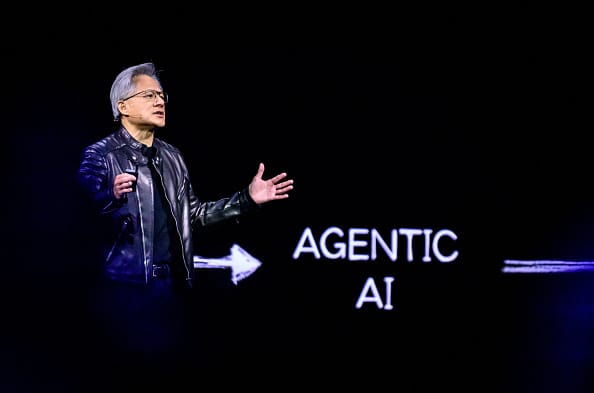
The chipmaker has been pitching the yet-to-be-released product to enterprise software companies as it seeks to capitalize on surging interest in agentic AI systems that can autonomously perform complex tasks. The move represents Nvidia’s latest effort to expand beyond its core hardware business into higher-level AI software and developer tools.
People familiar with Nvidia’s plans told WIRED that NemoClaw would allow enterprises to build, customize and deploy AI agents tailored to their specific operational needs. While full technical specifications have not been publicly detailed, the platform is positioned as an open-source solution aimed at making advanced agentic capabilities more accessible to large organizations.
Nvidia’s Strategic Push into Agentic AI
The development of NemoClaw comes as the AI industry shifts focus from standalone large language models toward “agentic” systems — AI that can plan, reason, use tools and execute multi-step workflows with minimal human intervention. Nvidia, best known for its GPUs that power AI training and inference, has increasingly invested in the software ecosystem surrounding its hardware.
According to the WIRED report, Nvidia has been actively demonstrating or discussing NemoClaw with potential partners in the enterprise software space. This pitching activity suggests the company is seeking early feedback and collaboration opportunities before a formal launch.
The platform’s open-source nature is expected to differentiate it from proprietary agent frameworks offered by cloud providers and specialized AI startups. By making the core platform open, Nvidia could accelerate adoption while still benefiting from its dominant position in the underlying GPU infrastructure required to run sophisticated AI agents at scale.
What Is Known About NemoClaw
Current public information about NemoClaw remains limited, as the project is still in planning stages. The name appears to combine “Nemo” — possibly referencing Nvidia’s existing Nemo framework used for conversational AI and large language model training — with “Claw,” which may evoke the idea of an agent that can “grasp” and manipulate digital environments or tools.
Reports indicate the platform is designed specifically for enterprise use cases. Companies would theoretically use NemoClaw to create and dispatch AI agents capable of handling workforce tasks ranging from data analysis and report generation to workflow automation and decision support.
No specific benchmarks, model sizes, performance metrics or pricing details have been released. It is also unclear what underlying models or frameworks NemoClaw will support, though given Nvidia’s ecosystem, integration with CUDA, TensorRT and NeMo-based models appears likely.
The CNBC article referencing the WIRED report notes that Nvidia is “leaning into the agentic AI craze,” highlighting the intense industry interest in autonomous AI systems following the success of tool-using models from companies like OpenAI, Anthropic and Adept.
Competitive Landscape in AI Agents
NemoClaw would enter a rapidly expanding field of AI agent platforms and frameworks. Several major players have already announced agent-related initiatives:
- OpenAI has demonstrated early agentic capabilities through custom GPTs and tool-calling APIs
- Anthropic has focused on constitutional AI and reliable agent behavior
- Specialized startups like Adept, MultiOn and others are building dedicated agent products
- Cloud providers including Microsoft, Google and AWS offer various agent orchestration tools
Nvidia’s approach differs by emphasizing an open-source foundation and deep integration with its hardware stack. Enterprises already heavily invested in Nvidia’s GPU infrastructure for AI workloads may find a native agent platform particularly attractive due to performance optimization and simplified deployment.
The open-source strategy could also help Nvidia counterbalance growing competition from open models and frameworks developed by Meta, Hugging Face and various academic labs. By providing an official open platform for agents, Nvidia may aim to become the de facto standard for enterprise-grade agent deployment.
Enterprise Focus and Potential Impact
The explicit targeting of enterprise software companies suggests Nvidia sees significant opportunity in helping large organizations integrate AI agents into existing business processes. Potential use cases mentioned in reporting include automating routine knowledge work, augmenting employee capabilities and streamlining operations across departments.
For developers and IT teams, an open-source agent platform could reduce dependency on third-party SaaS agent services while providing more control over data privacy and customization. However, success will likely depend on the quality of documentation, ease of integration with existing enterprise systems and the robustness of the agent reasoning capabilities.
Industry analysts have noted that while agentic AI holds enormous promise, practical deployment at enterprise scale remains challenging due to issues around reliability, hallucination, security and the need for human oversight. How effectively NemoClaw addresses these concerns will be critical to its adoption.
Technical Context and Nvidia’s AI Software Strategy
Nvidia has steadily built out its AI software portfolio in recent years. The company’s NeMo framework already provides tools for building and customizing large language models. NemoClaw appears to represent an evolution of this work into the agent domain.
The platform will likely leverage Nvidia’s strengths in accelerated computing. AI agents often require significant computational resources for planning, tool use and long-context reasoning. Running these systems efficiently at enterprise scale could provide Nvidia with another avenue to drive demand for its latest GPU architectures.
No information has been disclosed about whether NemoClaw will include a visual builder, code-first SDK, monitoring tools or specific agent memory and tool-calling abstractions. These details are expected to emerge as Nvidia moves closer to an official announcement.
What’s Next
According to current reporting, Nvidia has not yet set a public release timeline for NemoClaw. The company continues to engage with enterprise software firms to refine the product based on real-world requirements.
As development progresses, the industry will be watching for several key indicators:
- Official confirmation and detailed technical specifications from Nvidia
- Open-source repository launch (if following standard practices)
- Integration examples with popular enterprise software
- Performance benchmarks against existing agent frameworks
- Partnership announcements with major enterprise vendors
The project’s success could significantly influence Nvidia’s position in the AI software market. While the company currently dominates AI hardware, expanding successfully into open-source agent platforms could strengthen its influence across the full AI technology stack.
For enterprises evaluating AI agent strategies, NemoClaw represents a potentially important new option — particularly for organizations already standardized on Nvidia infrastructure. However, until more concrete details are available, many will likely continue exploring solutions from both Nvidia and its competitors.
The broader agentic AI trend is expected to accelerate through 2026 and beyond, with increasing investment from both established tech giants and specialized startups. Nvidia’s entry into this space with an open-source approach could help shape the standards and best practices for enterprise AI agent deployment in the coming years.