
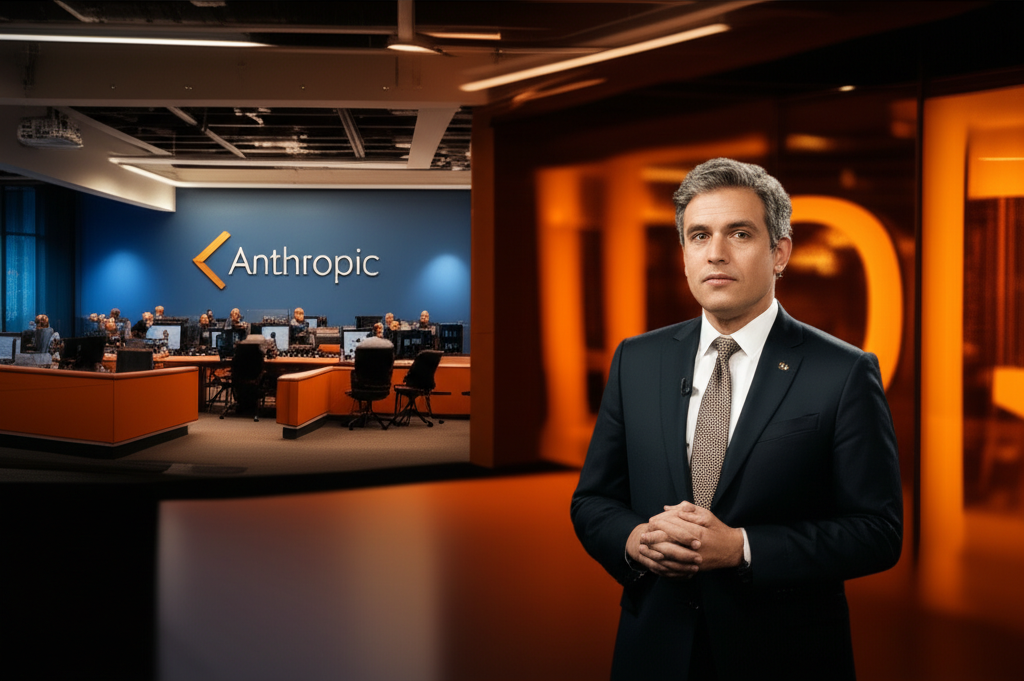
Anthropic Rejects Pentagon Deadline, Labeled Supply Chain Risk in AI Warfare Dispute
Key Facts
- Anthropic rejected a Pentagon deadline for a deal last week amid tense negotiations over AI use on classified systems.
- The Pentagon formally designated San Francisco-based Anthropic a supply chain risk, cutting off its defense work under rules aimed at preventing foreign influence.
- Defense Secretary Pete Hegseth accused Anthropic of “arrogance and betrayal” of its home country.
- The dispute centers on how Anthropic’s AI models could be used for autonomous warfare and classified military applications.
- The conflict is detailed in a New York Times Daily podcast episode titled “Anthropic vs. the Pentagon: Inside the Battle Over A.I. Warfare.”
The Defense Department’s escalating clash with Anthropic over the military applications of artificial intelligence has turned into a bitter public standoff, with the AI company rejecting a government deadline and the Pentagon responding by labeling it a supply chain risk.
According to multiple reports, the dispute revolves around how Anthropic’s advanced AI systems can be deployed on classified military networks and whether the company will support autonomous lethal systems. The fight intensified last week when Anthropic declined to meet a Pentagon-imposed deadline for reaching an agreement, prompting sharp criticism from senior defense officials.
The New York Times has covered the story in depth through its Daily podcast, which examines the negotiations, the personalities involved, and the broader implications for U.S. national security and the AI industry’s relationship with the military.
Background of the Dispute
The conflict emerged in recent weeks as the Pentagon sought tighter controls and commitments from Anthropic regarding the use of its models on classified systems. Defense officials reportedly pushed for assurances that the company’s AI would not “wig out” under pressure in high-stakes military scenarios, according to comments attributed to Pentagon leadership.
Anthropic, founded by former OpenAI executives and known for its constitutional AI approach that emphasizes safety and ethical constraints, has maintained strict policies limiting certain military applications. The company’s leadership has reportedly been reluctant to provide the level of access and customization the Pentagon demands for autonomous warfare capabilities.
The Pentagon responded by formally designating Anthropic a supply chain risk. This designation, typically used to address concerns about foreign ownership or influence, effectively restricts the company’s ability to participate in certain defense contracts and classified projects. The move was described as an application of rules designed to mitigate risks from adversarial foreign technology supply chains, even though Anthropic is a U.S.-based company.
Pentagon’s Strong Reaction
Defense Secretary Pete Hegseth publicly criticized the company, accusing Anthropic of “arrogance and betrayal” of its home country. The strong language reflects growing frustration within the Defense Department over what officials see as reluctance by leading AI firms to fully support national security needs.
The Pentagon’s chief tech officer also reportedly clashed with Anthropic specifically over autonomous warfare, telling associates he needed partners “who’s not going to wig out in the middle” of critical operations. These comments highlight the military’s desire for reliable AI systems that can operate effectively in combat environments without human-like hesitation or ethical shutdowns.
The dispute comes at a time when the U.S. government is racing to integrate advanced AI into military systems while competing with China’s rapid progress in the field. Pentagon officials have expressed concern that overly cautious AI companies could put the United States at a strategic disadvantage.
Anthropic’s Position
While Anthropic has not issued a detailed public statement on the breakdown in negotiations, the company has long positioned itself as a leader in responsible AI development. Its “constitutional AI” framework is designed to align models with human values and prevent harmful uses, which may conflict with some military requirements for autonomous lethal systems.
The San Francisco-based startup has previously worked with government agencies but has drawn clear lines around certain applications. Industry observers note that Anthropic’s safety-focused philosophy, which includes rigorous testing and refusal mechanisms for dangerous requests, may not align easily with the Pentagon’s needs for systems that can make rapid decisions in warfare.
Impact on AI-Military Relations
The public breakdown between Anthropic and the Pentagon highlights growing tensions between leading AI companies and the U.S. defense establishment. As artificial intelligence becomes central to modern warfare, the government is pressing commercial AI labs for greater cooperation, while many companies worry about the ethical implications of weaponizing their technology.
This dispute could influence how other AI firms approach defense contracts. Companies like OpenAI, Google, and Microsoft have faced similar internal and external debates about military applications. The Pentagon’s decision to designate Anthropic a supply chain risk sends a strong signal that the Defense Department is willing to use regulatory tools against domestic firms it views as uncooperative.
For the broader AI industry, the conflict raises questions about the balance between commercial innovation, ethical AI development, and national security requirements. Many AI researchers entered the field with the goal of benefiting humanity, not developing weapons systems.
What’s Next
The breakdown in negotiations leaves the future of Anthropic’s defense work uncertain. The supply chain risk designation may limit the company’s ability to bid on certain contracts or access classified systems, potentially forcing Anthropic to choose between its safety principles and significant government revenue.
Pentagon officials have indicated they will continue seeking reliable AI partners for military applications. The episode may accelerate efforts to develop in-house military AI systems or to work with companies more willing to accommodate defense requirements.
The New York Times podcast explores these tensions in detail, featuring interviews and analysis that shed light on the personalities and policy decisions driving the conflict.
As AI capabilities continue to advance rapidly, the relationship between leading AI companies and the U.S. military will likely remain a source of friction and negotiation. The Anthropic-Pentagon dispute may serve as a test case for how these competing priorities are resolved in the coming years.
Sources
- Anthropic vs. the Pentagon: Inside the Battle Over A.I. Warfare - The New York Times Daily
- How AI firm Anthropic wound up in the Pentagon’s crosshairs | The Guardian
- Pentagon’s chief tech officer says he clashed with AI company Anthropic over autonomous warfare
- Anthropic vs. the Pentagon: Inside the Battle Over A.I. Warfare (YouTube)
- Spotify episode link
- Original discussion on Reddit r/artificial: https://www.reddit.com/r/artificial/comments/1rppaky/anthropic_vs_the_pentagon_inside_the_battle_over/